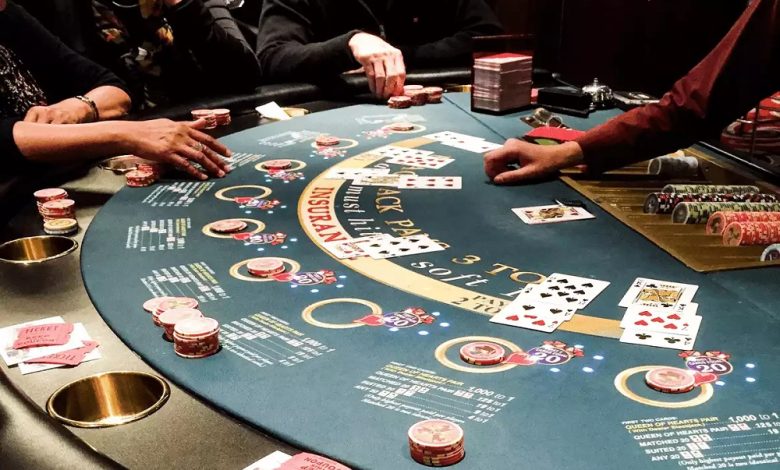
Blackjack has maintained its status as the most popular casino card game in the world for generations. Its enduring appeal lies in a unique blend of straightforward basic rules, active decision-making, and exceptionally low house advantages when played with basic strategy. At its core, the objective remains universal: build a hand total closer to twenty-one than the dealer without going over.
As the casino industry expanded across land-based establishments and digital platforms, game developers created numerous blackjack variants. These variations alter core mechanics, introduce innovative side bets, modify payout ratios, and shift statistical advantages. While some variants offer genuine player-friendly rules, others compensate for exciting gimmicks with hidden disadvantages. Understanding how these blackjack formats differ in terms of rules, strategy adjustments, and expected value is essential for any disciplined player.
The Standard Baseline: American versus European Blackjack
Before examining exotic versions, it is critical to understand the two foundational formats that govern traditional play: American Blackjack and European Blackjack.
American Blackjack
Often referred to as Classic Blackjack, American Blackjack is the primary format found across casinos in the United States.
-
The Hole Card Mechanic: The dealer receives one card face up and one card face down (the hole card). If the dealer face-up card is an Ace or a ten-value card, they immediately peek for a potential natural blackjack before players take their turns.
-
Early Resolution: If the dealer has blackjack, the round ends immediately. Players who do not hold a natural blackjack lose their original wager, but they avoid losing additional money on double downs or split hands.
-
Doubling and Splitting Flexibility: Players are typically permitted to double down on any two starting cards and double down after splitting pairs. Late surrender is also frequently offered.
European Blackjack
Predominant in European, Asian, and Latin American gaming venues, European Blackjack features a subtle procedural difference that significantly alters optimal risk calculation.
-
No Hole Card Rule (ENHC): The dealer receives only one card face up at the initial deal. The second dealer card is not dealt until all players at the table have completely finished their hands.
-
Higher Downside on Splits and Doubles: Because the dealer does not check for blackjack beforehand, a player might double down on an eleven or split a pair of eights, only to lose both initial and secondary wagers if the dealer draws a natural blackjack at the very end of the hand.
-
Restricted Doubling: Doubling down in traditional European formats is often restricted exclusively to hard totals of nine, ten, or eleven.
Spanish 21: High Action and Modified Decks
Spanish 21 is one of the most widely played alternatives to standard blackjack. It changes the composition of the deck itself, creating a dynamic, volatile gameplay experience.
The defining characteristic of Spanish 21 is that all standard ten-spot cards are removed from the shoe. The face cards (Jacks, Queens, and Kings) remain, leaving forty-eight cards per deck instead of fifty-two. Removing four ten-value cards per deck inherently swings the mathematical advantage sharply toward the house, as it reduces the likelihood of natural blackjacks and weakens player doubling totals.
To balance this disadvantage, Spanish 21 introduces an array of generous, player-friendly rules:
-
Player Twenty-One Always Wins: A player hand totaling twenty-one always beats a dealer twenty-one, including natural blackjacks, which are paid immediately at standard 3:2 odds regardless of what the dealer draws.
-
Late Surrender and Double Down Rescue: Players can surrender after doubling down, forfeiting only their original wager while reclaiming the doubled portion.
-
Bonus Payouts: Special payouts are awarded for specific twenty-one combinations, such as five-card, six-card, or seven-card twenty-ones, as well as 6-7-8 and 7-7-7 suited combinations.
-
Unrestricted Doubling and Hitting: Players can double down on any number of cards, redouble up to three times, and draw to split Aces.
When played with specialized Spanish 21 basic strategy charts, the house edge on this variant can be as low as 0.40 percent, making it mathematically competitive with classic tables.
Double Exposure Blackjack: Complete Card Visibility
Double Exposure Blackjack eliminates the mystery of the dealer hand by dealing both dealer cards completely face up from the start. This gives players total information when deciding whether to hit, stand, double, or split.
Having complete knowledge of the dealer exact two-card total eliminates guesswork on marginal hands, such as hitting a twelve against a dealer showing a total of thirteen to sixteen. However, to compensate for this massive informational edge, casinos implement strict rules:
-
Dealer Wins All Ties: The house wins every push, except on tied natural blackjacks.
-
Even-Money Natural Blackjacks: A player natural blackjack pays only 1:1 (even money) instead of the standard 3:2 payout.
-
Restricted Splitting and Doubling: Doubling down is often restricted to hard totals of nine, ten, or eleven, and pair splitting is frequently limited to a single split per round.
Because losing all standard pushes represents a severe mathematical penalty, the basic strategy for Double Exposure requires far more aggressive hitting and doubling compared to classic games.
Blackjack Switch: The Two-Hand Dynamic
Blackjack Switch introduces an inventive mechanical twist by allowing players to trade cards between two simultaneously dealt hands to build superior totals.
Players are required to place two equal bets per round and receive two distinct hands. Before making standard playing decisions, the player has the option to switch the second card dealt to each hand. For instance, if a player is dealt an 8-6 (14) on the first hand and a 5-8 (13) on the second hand, switching the top cards creates an 8-8 pair (which can be split) and a 5-6 (an ideal 11 for doubling down).
To offset the massive advantage of swapping cards, the game incorporates two specific counter-rules:
-
The Dealer 22 Push Rule: If the dealer busts with a total of exactly twenty-two, it does not count as a dealer loss. Instead, it results in a push against all remaining, non-busted player hands. Only an unswitched player natural blackjack beats a dealer twenty-two.
-
Even-Money Blackjacks: Natural blackjacks pay 1:1 rather than 3:2.
Despite these caveats, Blackjack Switch features a low baseline house edge of roughly 0.58 percent when using proper switching and playing strategies.
Pontoon: The British Relative
Pontoon is the traditional British and Australian variation of twenty-one, featuring distinct terminology and strict betting constraints.
-
Unique Terminology: An Ace with a ten-value card is called a Pontoon rather than a blackjack. Hitting is referred to as twisting, standing is called sticking, and doubling down is known as buying.
-
Hidden Dealer Cards: Both dealer cards remain completely face down until all players finish their actions.
-
The Five-Card Trick: Any hand consisting of five cards totaling twenty-one or less is ranked as a Five-Card Trick. This hand outranks all regular non-Pontoon hands, regardless of total, and pays 2:1.
-
Mandatory Hitting: Players are forced to twist on any hand total of fourteen or lower.
-
Dealer Wins All Ties: The dealer claims all ties, meaning a dealer twenty-one beats a player twenty-one, and identical lower totals favor the house.
Pontoon requires an independent strategic approach because the Five-Card Trick creates unique mathematical incentives to continue hitting soft, multi-card totals.
Comparative Overview of Core Variants
Understanding how these variants compare across key technical categories helps clarify which game fits your personal playstyle and risk tolerance:
-
Classic American Blackjack: House edge around 0.50 percent; standard 3:2 blackjack payout; standard deck; dealer peeks for blackjack; standard basic strategy complexity.
-
European Blackjack: House edge around 0.60 to 0.70 percent; standard 3:2 blackjack payout; standard deck; no hole card (ENHC); intermediate basic strategy complexity.
-
Spanish 21: House edge around 0.40 to 0.80 percent; variable bonus payouts (up to 3:1); forty-eight card decks (no tens); late surrender with double down rescue; advanced strategy complexity.
-
Double Exposure: House edge around 0.65 to 0.90 percent; 1:1 blackjack payout; both dealer cards visible; dealer wins all non-natural pushes; specialized aggressive strategy complexity.
-
Blackjack Switch: House edge around 0.55 to 0.60 percent; 1:1 blackjack payout; card swapping between two hands; dealer twenty-two pushes non-busted hands; advanced multi-tier strategy complexity.
-
Pontoon: House edge around 0.35 to 0.50 percent; 2:1 payout for Pontoon and Five-Card Trick; both dealer cards hidden; forced hits below fifteen; advanced strategy complexity.
Selecting the Right Variant for Your Bankroll
Choosing the most appropriate blackjack variant depends on balancing mathematical value with gameplay preferences.
If your goal is pure mathematical efficiency with straightforward decision trees, Classic American Blackjack with late surrender and 3:2 payouts remains the premier choice. For players who enjoy intricate decision-making, hand manipulation, and dynamic bonus payouts, Spanish 21 and Blackjack Switch offer engaging strategic depth without sacrificing favorable baseline odds.
Regardless of the variant selected, you should always avoid tables offering 6:5 payouts on natural blackjacks, as that single rule modification inflates the house advantage by roughly 1.4 percent, wiping out the strategic edge of any game format.
Frequently Asked Questions
Why do some blackjack variants pay 6:5 on naturals instead of 3:2, and how does that affect the game?
A 6:5 payout significantly reduces player winnings on natural blackjacks. On a ten-dollar wager, a 3:2 payout yields fifteen dollars in profit, whereas a 6:5 payout returns only twelve dollars. This three-dollar difference on every blackjack increases the house edge by approximately 1.39 percent, making 6:5 games among the worst statistical options in any casino regardless of other favorable rules.
Does card counting work the same way across all blackjack variants?
No, card counting systems must be recalibrated for different variants. In Spanish 21, standard running counts must account for the missing ten-spot cards, requiring specialized counting systems like the Spanish High-Low. In games like Double Exposure or Blackjack Switch, the modified dealer bust rules and payout reductions dilute the mathematical advantage typically gained from high true counts.
What is the primary difference between a soft seventeen and a hard seventeen in table rules?
A soft seventeen includes an Ace counted as eleven (such as Ace-6), meaning the hand cannot bust on the next hit. When table rules dictate that the dealer must hit soft seventeen (H17), the house advantage increases by roughly 0.22 percent compared to tables where the dealer must stand on all seventeens (S17), because the dealer gains another opportunity to improve their total.
Can standard basic strategy charts be used across different blackjack variants?
Standard basic strategy charts should never be used universally across different variants. Each game features unique rules that alter the mathematically optimal play. Using a standard classic chart on a Spanish 21 or Double Exposure table leads to substantial strategic errors, such as miscalculating multi-card hits, incorrect doubling opportunities, and flawed surrender decisions.
What makes surrender such a valuable rule in variants that allow it?
Surrender allows a player to forfeit half of their initial wager and immediately end the hand when facing an unfavorable match-up, such as holding a hard sixteen against a dealer Ace or ten. Utilizing basic strategy for late surrender reduces the overall house edge by approximately 0.08 percent and significantly dampens bankroll variance during prolonged sessions.
Are side bets in blackjack variants mathematically worth playing?
The vast majority of blackjack side bets, such as Perfect Pairs, 21+3, or Match the Dealer, carry house edges ranging from 3 percent to over 15 percent, far higher than the base game advantage. While they offer enticing multi-to-one payouts, consistent wagering on side bets drastically increases bankroll volatility and deteriorates long-term expected returns.
Why do multi-deck shoes have a higher house advantage than single-deck games with identical rules?
Adding more decks into a shoe reduces the statistical probability of being dealt a natural blackjack because removing an Ace or ten from a larger deck pool changes the remaining ratios less dramatically than in a single deck. Furthermore, multi-deck shoes slightly reduce the expected return on successful double downs due to minor card depletion dynamics.